The Inclusive Mobility in Vocational Education and Training (IMVET) project is a European initiative aimed at improving the accessibility of mobility programs for students with disabilities. The project is in line with the European Pillars of Social Rights and the UN Convention on the Rights of Persons with Disabilities. Despite the proven benefits of international experiences, students with disabilities often face obstacles when participating in mobility programs. IMVET aims to examine these barriers and create awareness of the need for improvement.
Goals IMVET
The IMVET project aims to make mobility experiences more accessible to students with disabilities.
Using research to understand the specific barriers students with disabilities experience before, during and after their international mobility.
Increase awareness of importance of more inclusive mobility programs among policymakers and other concerned education professionals.
Increase the knowledge and skills of MBO professionals for better guidance of students with disabilities during their mobility experience.
Providing new accessible communication materials to better educate students with disabilities about mobility options.
The IMVET Consortium
The consortium consists of the following partners: ECIO (project lead)|, Firda, King Willem I College, College CESUR (TU Centro Oficial de FP), Tartu Vocational College, Diakonia College of Finland, and DSE Achaia.
The Inclusive Mobility in Vocational Education and Training (IMVET) project is a three-year project funded by Erasmus+ KA220. The duration of the project is September 1, 2023 to August 31, 2026.
Research report and infographic
The accomplished IMVET research report “Inclusive Mobility for VET Students with Disabilities” provides an overview of the barriers that VET students with disabilities face when participating in learning mobility, as well as the challenges that VET educators face in supporting these students.
The report presents the results of a literature review and interviews with vocational education students with disabilities and vocational education professionals in five European countries (the Netherlands, Finland, Spain, Estonia and Greece). The report highlights what is needed to make international experiences more accessible to vocational education students with disabilities.
The infographic provides a quick and visual overview of key findings, including key needs of students and professionals in vocational education. The document and infographic are useful for:
everyone who is committed to making international mobility more inclusive.
Professional educators and international coordinators.
The IMVET Inclusive Mobility Toolkit is a practical resource created to help vocational education and training (VET) institutions make international mobility programmes more accessible and inclusive for learners with disabilities. International experiences such as internships, exchanges and study visits can strongly support personal development, employability and independence, yet many learners still face barriers to participation. The IMVET project aims to help remove these barriers and create equal opportunities for all.
The toolkit includes two key elements:
Self assessment tool
The self assessment tool helps educational institutions evaluate the inclusiveness of their mobility programmes across 6 key areas from institutional strategy and personalised support to inclusive communication and digital accessibility. It generates a score per module to provide insight into strengths, challenges and opportunities for improvement.
Please note that the Self-Assessment Tool is available as a downloadable Excel file so that your organisation can save it, reuse it over time, and track your progress at your own pace.
Practical Guidelines with tips, best practices, templates and checklists for organising inclusive mobility.
The guidelines cover six key areas:
Introduction
Initial preparations
Pre-mobility
During Mobility
Post-Mobility
Resources & References
Together, these tools help institutions turn ambition into action and create mobility opportunities for every learner. We invite VET institutions, mobility coordinators, teachers, counsellors and policymakers across Europe to explore the IMVET Inclusive Mobility Toolkit and take the next steps toward inclusive internationalization.
Is your company hosting an (international) VET student who needs extra support? This IMVET flyer offers practical tips in six areas: a good start, clear communication, structure, a safe learning environment, practical support and cooperation with the school. Are you a teacher, internship supervisor or mobility coordinator? Share the flyer with the host companies you work with, for example when preparing an internship. This way, student, school and company work together towards an inclusive internship.
More and more vocational students go abroad during their studies. This can be educational and exciting, and it helps you learn new skills, meet new people, and see new places. However, taking this step is not always easy for everyone. Students who need extra support during their studies often face more challenges. Information about going abroad is not always easy to find, understand, or use.
In the IMVET project, we work together with students to make information about international mobility clearer and easier to use. Students share their own experiences, stories, and practical tips about going abroad. What did they find difficult? What support did they receive? And what helped them take this step? Below, you can read their stories. With these interviews, photos, and other materials, we want to help other students prepare for an international experience. Because everyone should have the chance to learn and grow across borders.
Student brochures & posters
Below you can download the printable version of the student brochure in several languages
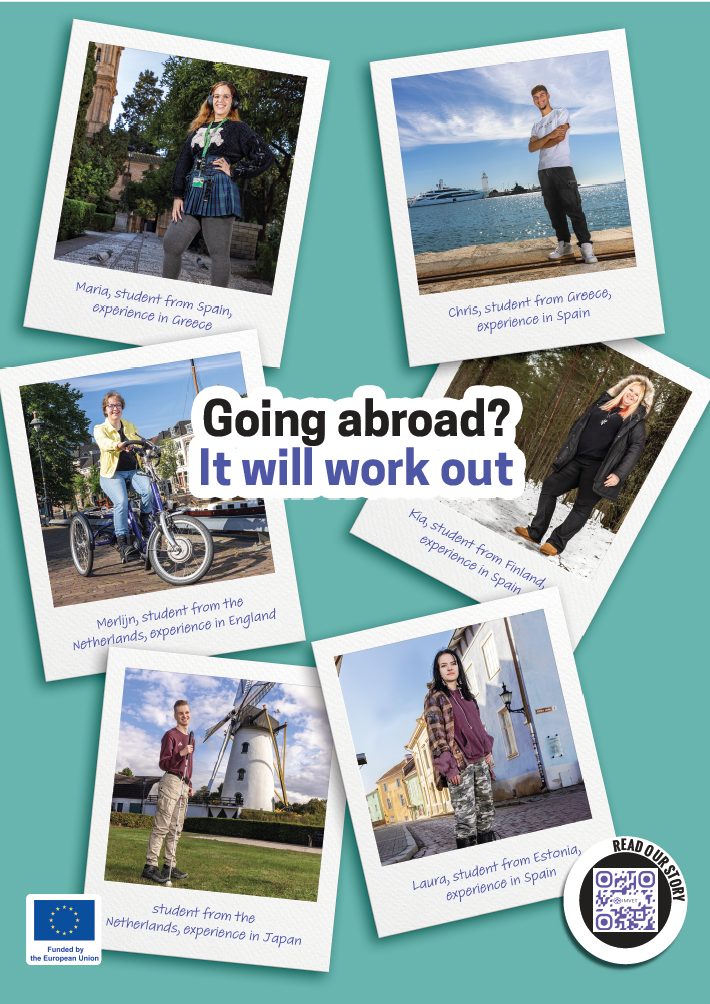
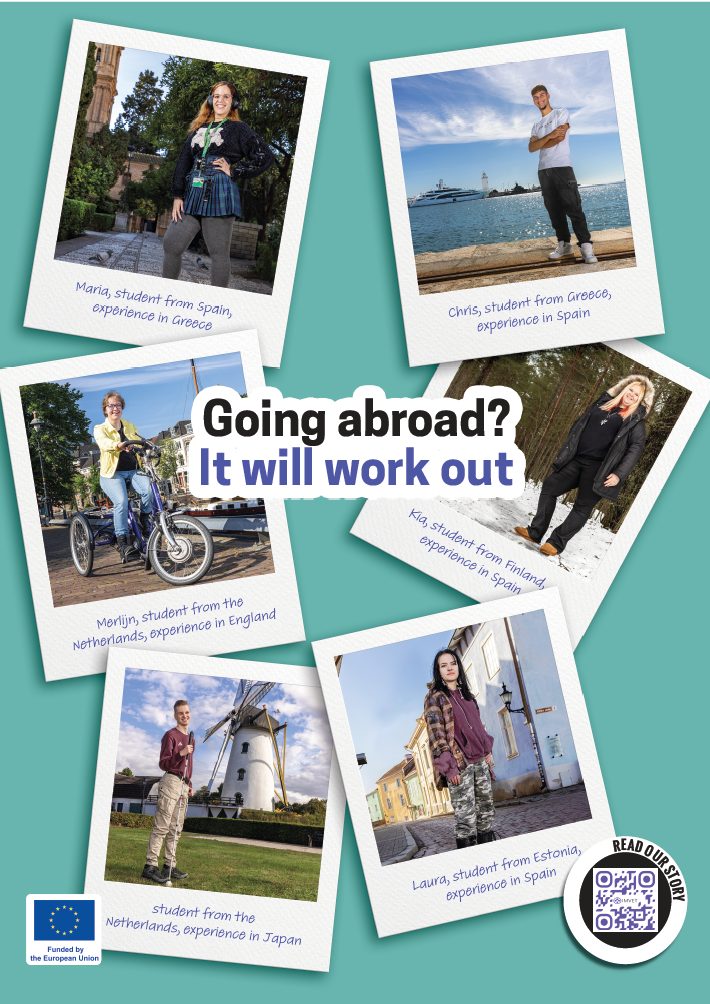
High-quality versions of the student brochure and posters can be requested via algemeen@ecio.nl. If you would like, you can also adapt and translate the materials into your own language. A collective poster with the IMVET students is also available and can be requested via the same email address; see the image below for an example. You are also welcome to adapt and translate the materials into your own language.
Read the student experiences
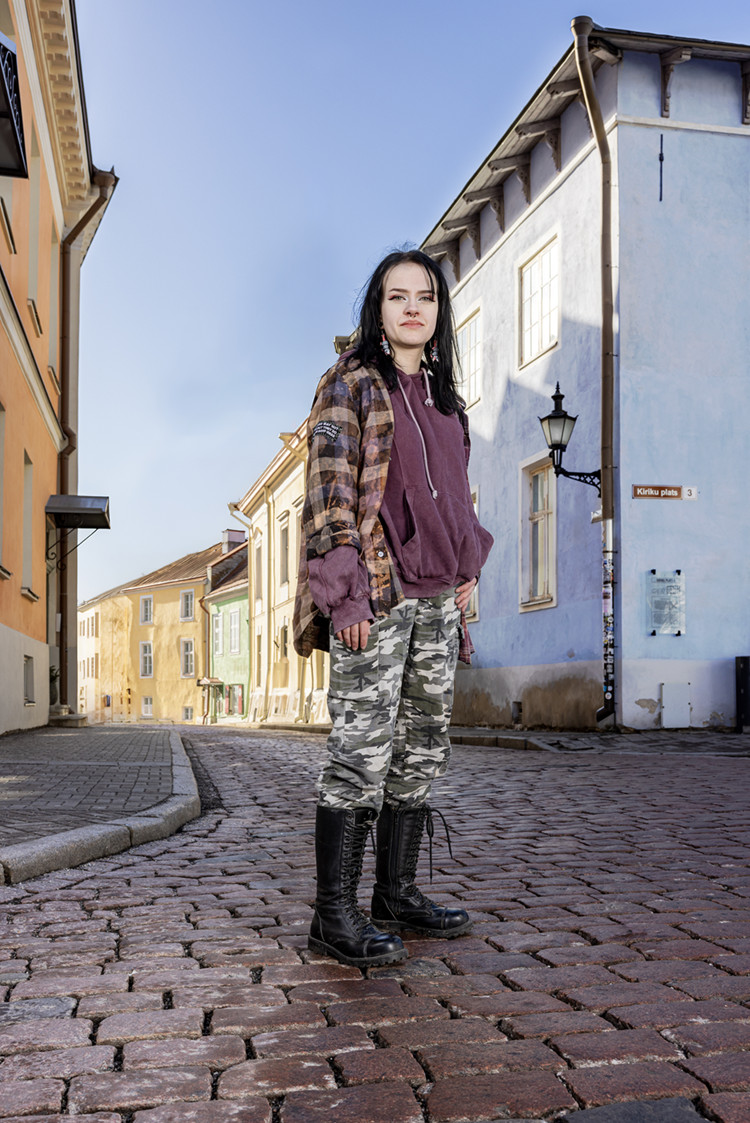
Laura: “There is no need to be afraid”
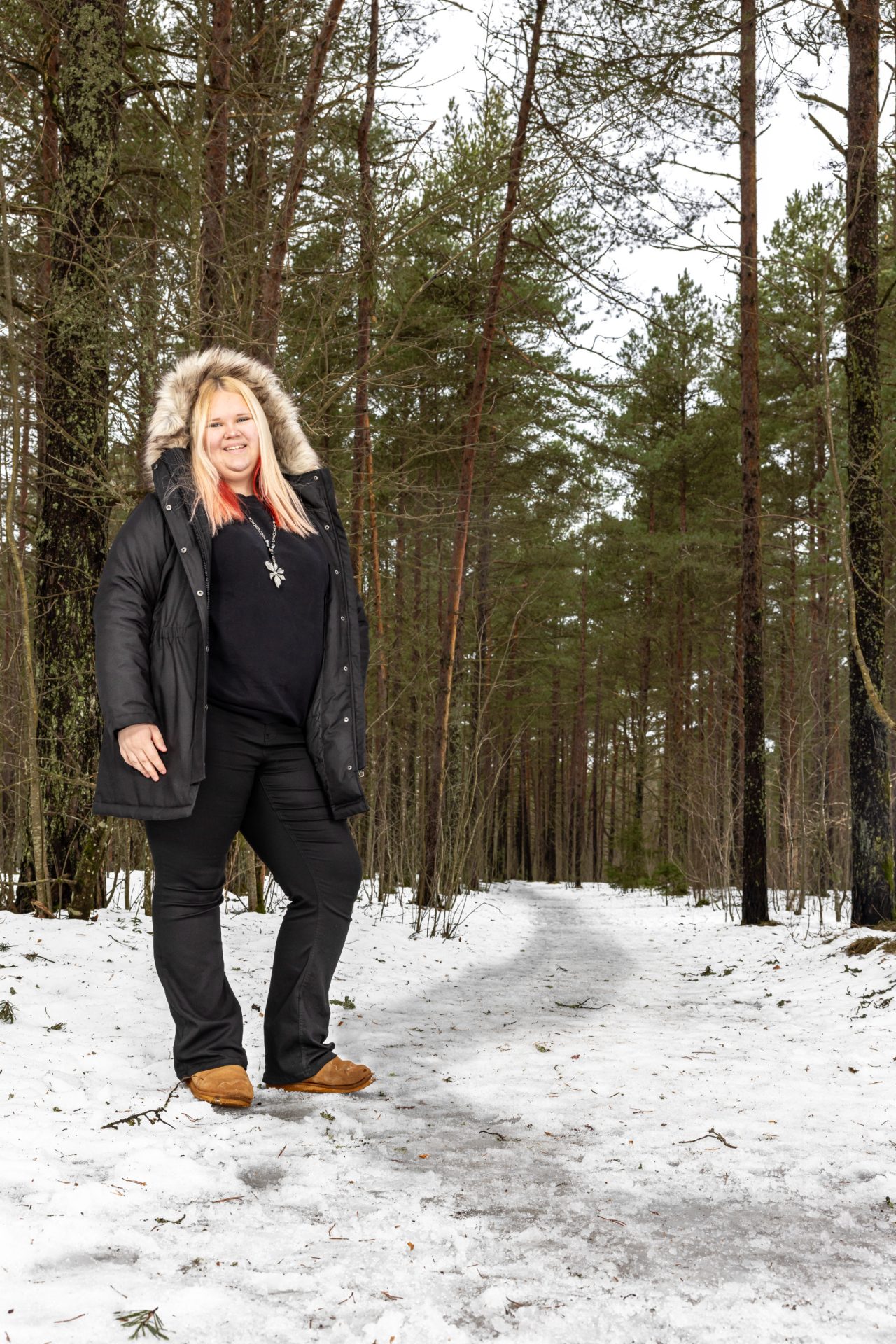
For Laura, an Estonian automotive painting student in her final year, going abroad was about more than just travel. She is someone who is open and energetic, but who can also experience fluctuations in energy and emotions, especially in new or intense situations.
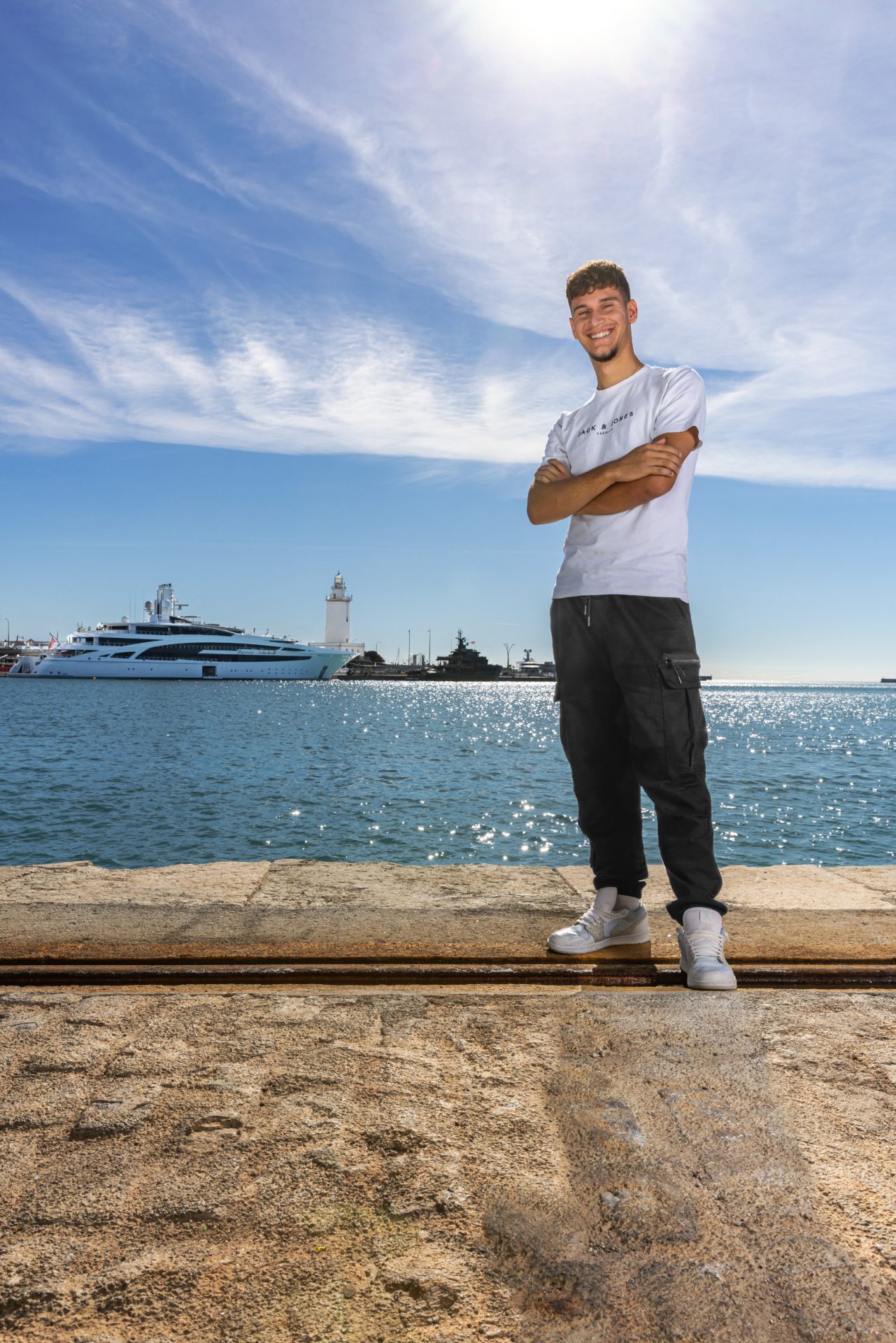
For Chris, a Greek student in electrical engineering, going abroad was an opportunity to challenge himself. He describes himself as someone who enjoys new experiences and always tries his best, even when things are not easy.
Kia: “A small step abroad that made a big difference”
For Kia, a 17-year-old Finnish student in early childhood education and family work, going abroad started as a small step. She describes herself as independent, empathetic and creative. But also someone who can feel overwhelmed in new environments and busy social situations, and who needs to find the right balance between activity and rest.
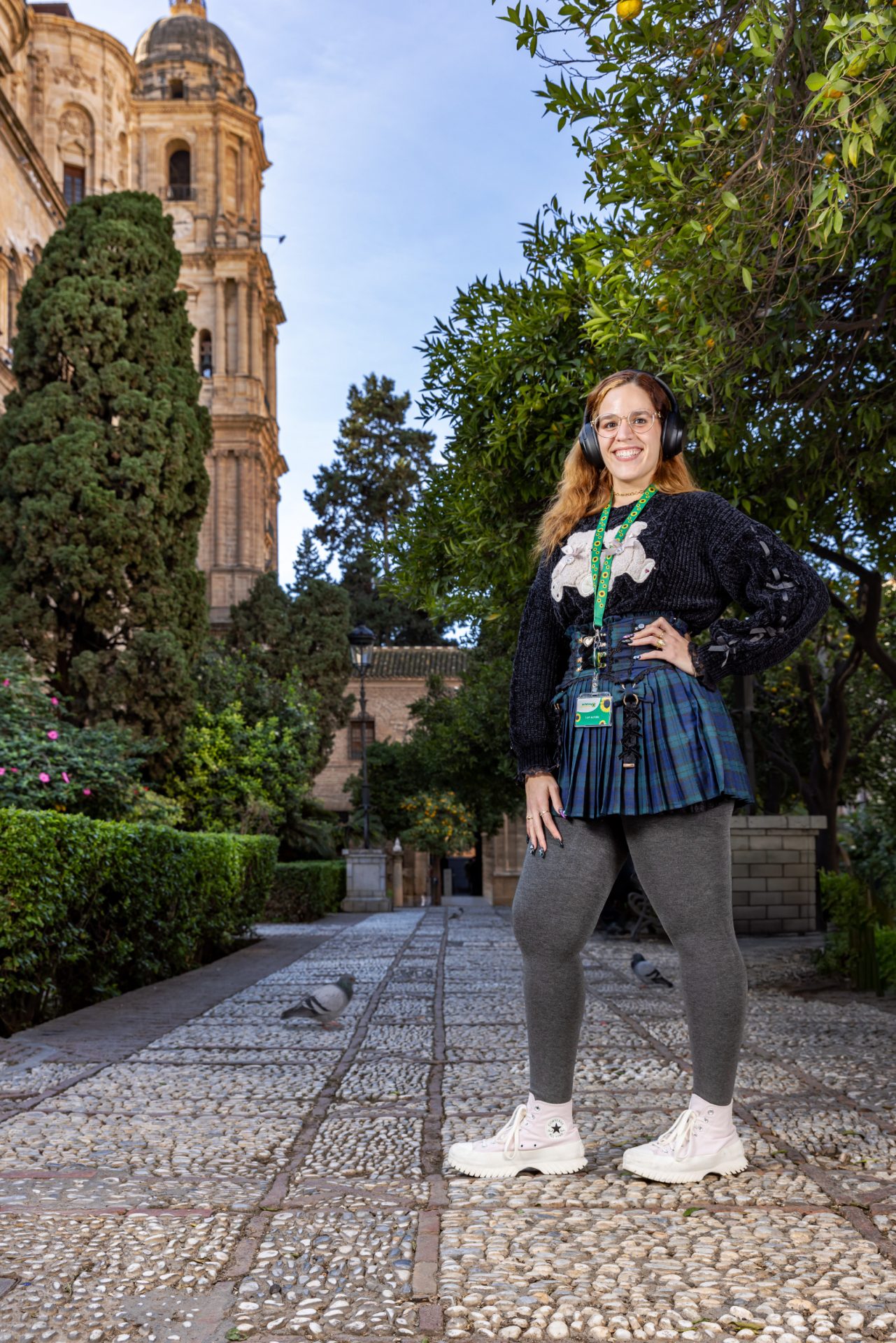
For Maria, a 26-year-old Spanish dental hygienist student, going abroad was not something she took lightly. She is someone who is very self-aware and thoughtful, and who experiences new environments, travel and daily routines quite intensely. Busy or unfamiliar situations can feel overwhelming at times, especially when combined with her health conditions and food allergies. Still, she decided to take the step and joined an Erasmus mobility in Greece.
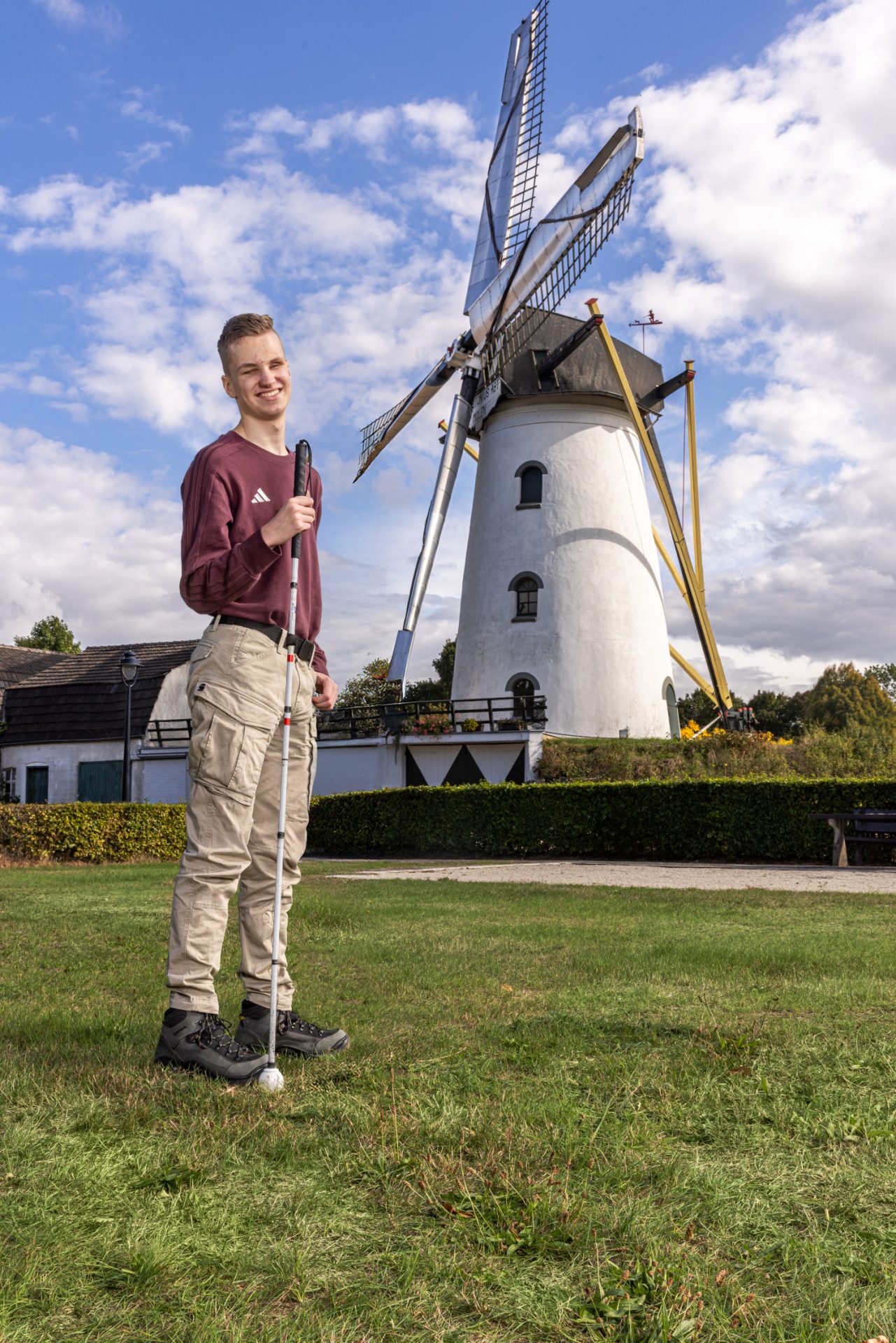
For Wout, a Dutch student in Allround IT Systems and Devices, his international experience started in a big way. At seventeen, he traveled to Japan – his first time outside Europe, and also his first time traveling without his parents. Not for a holiday, but for work: as an expert by experience, he helped introduce products for people who are blind or visually impaired. Wout is blind himself, which allowed him to explain better than anyone how this technology works in practice.
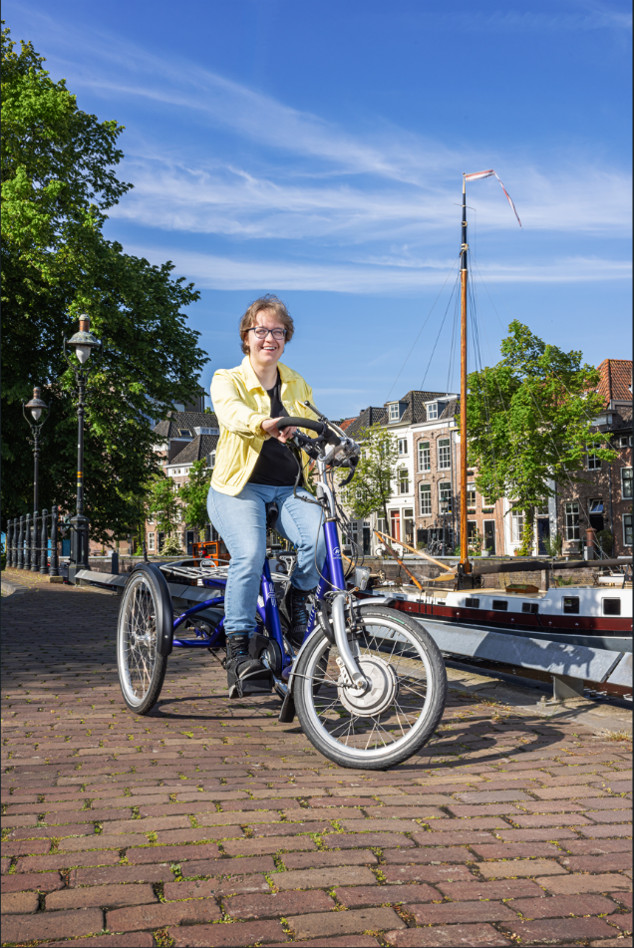
For Merlijn, a 23-year-old Media & Journalism student from the Netherlands, travelling is a way to discover new places, meet new people, and learn new things. During her studies at Koning Willem I College, she found her passion for stories, creativity, and exploring the world.
Recently, she travelled to London on her own for the first time. This was a big step because Merlijn lives with *cerebral palsy and epilepsy.