
Student experience | Kyra on studying with fatigue and pain: study choices and key moments
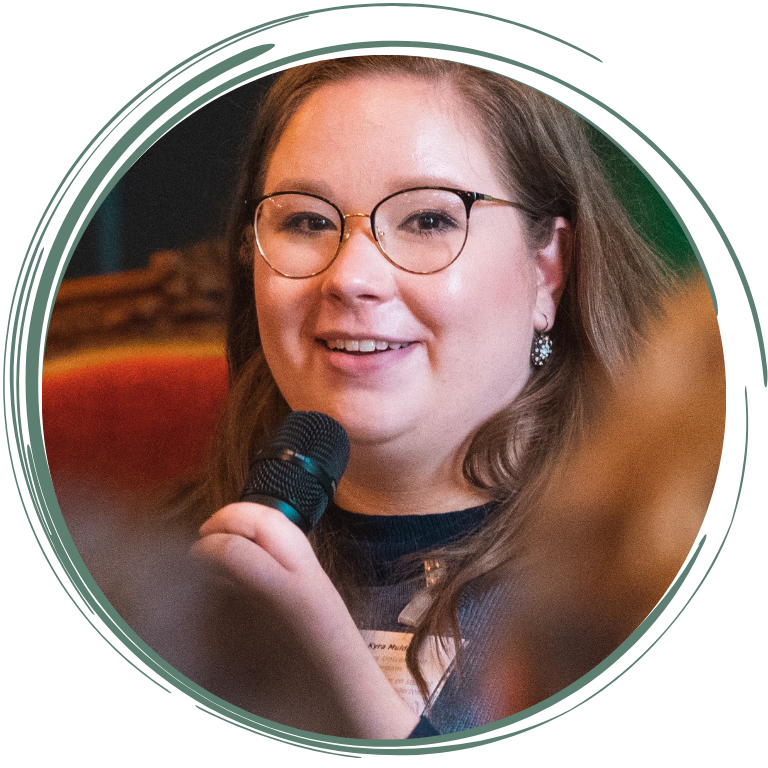
“Guidance at specific key moments of the study process is necessary.”
Due to her connective tissue disorder, Kyra deals with fatigue, pain and nausea during her college years. Despite these challenges, she is determined: she is working on a Master’s degree in Social Inequalities at EUR and completing her thesis for her second bachelor’s degree in Philosophy of a Specific Science Discipline. This is part of a double degree program. Kyra’s mobility is often supported by a manual wheelchair, highlighting the need for adapted facilities and assistance during the various key moments of the study process. She shares her story to shed light on the importance of support for students with support needs. Her tips and insights are valuable not only to education professionals, but also to fellow students, whether they need support or not.
“My disability affected my choice of study “
Study Choice
“Although I always aspired to a university degree because of my preference for theory, from havo I had to go through college first. After one year of applied psychology, I transferred to university. Health problems forced me to discontinue my sociology studies, which led to my choice of Health Sciences. Here I wanted to learn how to make health care more patient-centered. For depth, I later chose a second study: philosophy. My master’s choice was driven by my experiences as a student with a disability. I wanted to learn more about how inequality comes about and what theoretical foundations underlie it.”
Application and introduction
“My experiences at the university in terms of information and guidance were mixed. During the open day, the guidance seemed promising, but the student advisor involved left before I started. Her successors changed quickly and had limited knowledge. At my undergraduate Philosophy, at a different faculty, I had to declare my disability again, despite previous agreements. Communication was gruff and unclear, and the subsequent advisor was often absent. In the end, the third study advisor did manage to do a lot for me by offering support in arranging exam facilities and adapted exams. Fortunately, the guidance at my master’s, under yet another faculty, was positive: an advisor was always available and facilities were proactively arranged.”
Introduction Week
“Unfortunately, I was unable to participate in Erasmus University’s induction week. The locations where these events took place turned out not to be accessible for wheelchair users, and traveling around the city also proved challenging for me. The side effect was that I often did not know my fellow students well. Also because I often sat alone at the front of the class after introductions. Moreover, I noticed that some fellow students were reluctant to work with me because I could not always be present. Combining an intensive rehabilitation program and my studies proved to be tough, causing me to miss teaching. Consequently, I often depended on their notes when I could not attend lectures. A wheelchair-friendly introductory week would have made it easier to make contacts and would have shown fellow students that despite the challenges, they are not insurmountable.”
Internship
During my undergraduate health sciences, I had to do an internship. Because of my disability, finding an internship was a challenge. The internship coordinator helped me and suggested an internship with faculty, given my interest in research. There I did research on studying with a disability by analyzing students’ experiences. This internship was so positive that I now work there part-time. My colleagues and professor are supportive and together we work to make the university more accessible for everyone. This experience has brought me closer to the university and allows me to advise others on getting the right support.”
Study Abroad
“Unfortunately, I did not have a chance to study abroad. This what a wish of mine before I started my studies. The COVID pandemic complicated this plan, but also obtaining relevant information about participating in a (partial) study abroad program as a student with a disability proved challenging.”
Side job
“After my positive internship experience, I still work in the same department as a side job. My colleagues are ready to help, and I feel comfortable asking for help. The professor I work with is understanding about my situation and supports initiatives to make the university more accessible to all students with disabilities. This connection has strengthened my connection to the university and made me more confident in seeking help. I also use these insights to advise fellow students about available support.”

