
Retrospective | Student Wellbeing – GenZo to Achieve!
| March 11, 2025 | National Student Wellbeing Network
“How do you reach and mentor today’s student generation?”
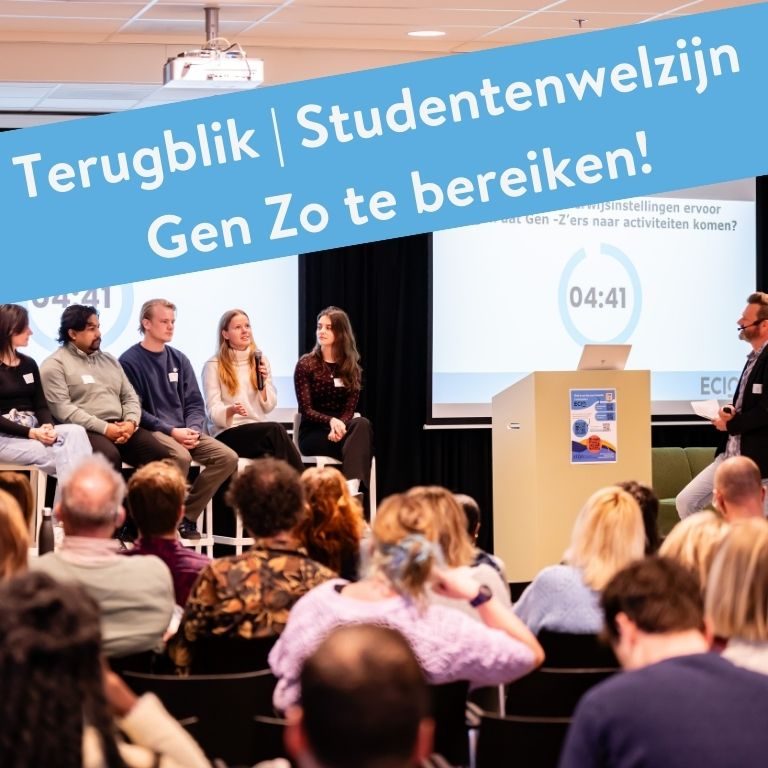
How do you make them feel seen and heard? On March 11, 2025 education professionals, students and experts from secondary and higher vocational schools (MBO), universities of applied sciences (HBO) and universities of applied sciences (WO) came together in Congress Center Domstad Utrecht for the first meeting of the
Student Wellbeing and the challenges of Generation Z
Student well-being is an increasingly pressing issue within education. Although numerous initiatives have been launched, one question keeps coming back: how do we really reach this generation? From practice, we get more frequent signals that it is becoming increasingly difficult to truly reach current students, attendance and participation rates are low, and although more and more initiatives are emerging to support students, the problems remain the same.
During the meeting, we addressed practical tools to better reach and guide students and explored together how educational institutions can create an environment where students feel heard and can develop optimally.
Content and highlights of the meeting
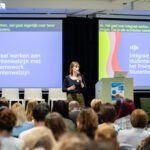
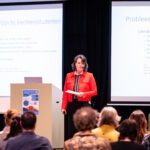
The day was opened by Serge Feldmann, senior policy advisor student welfare at Hogeschool Rotterdam. This was followed by an inspiring keynote by Nessa Ikani, associate professor and researcher at Tilburg University and Pro Persona. In her lecture “Youth welfare in perspective: from figures to insight and action,” she shared insights on the representativeness of welfare figures. According to Nessa, figures from recent studies (for example, the GGD Young Adults Health Monitor) show that things are getting worse for young people. She wants to put these figures in perspective and shares the importance of context. ‘Figures are a snapshot, a snapshot of what is happening right now. They don’t really give insight into what things look like over time. When we talk about well-being, we need to look not just at the snapshot but at the whole movie.’ Digital diary recordings, a method Nessa herself uses in her research, is one way we can gain real time insight into what things really look like with student well-being. This approachable method allows us to gain more and more insights that help us support students appropriately.
Framework for working integrally on student wellbeing
After the keynote, Jolien Dopmeijer launched a framework for working integrally on student wellbeing on behalf of the national student welfare program Stijn.
The Student Wellbeing Framework makes clear both visually and in textual content how to work integrally on student wellbeing. Working integrally means that the various themes and activities in the area of student wellbeing are carried out in cohesion. Integral also means working on student wellbeing together with partners, not only within the educational institution, but also outside it with, for example, municipalities and care and prevention professionals.
For the first time, based on science and (international) practice, an elaboration has been made on integral working. As an institution, you make the translation to your own practice.
- The framework allows you to see at a glance which conditions or content themes are already being worked on and where opportunities remain
- It provides common language
- It offers confirmation to educational institutions that already work integrally
The Stijn program is a collaboration between Trimbos Institute and ECIO | Expertise Center for Inclusive Education.
Gen Z speaking!
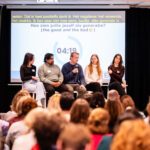
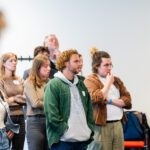
After this in-depth start, participants engaged in a conversation with a panel of five students about what they think is important to their well-being and how educational institutions can really make a difference. This conversation revealed that students feel it is essential that educational institutions actively try to gather information from them and really listen to what they are saying, rather than just broadcasting about how they should do things. By making greater use of digital communication through social media, taking a personal approach, engaging students more with ideas and actually listening to their feedback, educational institutions can be more responsive to students’ needs. It is also important that students know and see what is being done with their input.
Partial sessions
The partial sessions allowed participants to delve into various aspects of student wellbeing.
Click here for the partial session: The Power of Gen Z – Aleksandra Stuip
In this partial session, Aleksandra Stuip took us into the world of Gen Z. In order to reach students, from Generation Z, it is important to get them to the table and engage with them. Therefore, it is important to understand who they are, what language they speak and what they are good at, and where exactly they could use more support from older generations. It is good to know where the differences between Gen Z and the generations before them lie. The leadership style that Gen Z needs is one of the biggest differences. This revolves around personal connection and creating an atmosphere of trust. Aleksandra also indicated that Gen Z’s mental concerns are different from those of the generations before them. Where previous generations might have been exposed to world news once a day, Gen Z is in the front row and they take this with them into the rest of their daily lives.
All generations heard from the generations before them that they were not good at something. So did Gen Z. But this generation likes to hear what they are good at. Put Gen Z in their power. Make working agreements in advance in which you both indicate what you like in a working relationship, give them space to tell you what they are good at and where they could use more help and guidance.
Click here for the partial session: How do you reach and engage Gen Z in mental health? – Tess Franken (By the Sound) and Jamal Lachkar (Life After School)
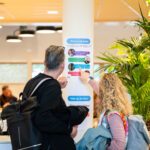
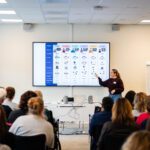
The session was about how professionals can promote bonding, awareness and movement among students. Tess and Jamal began with an introduction, followed by a game of bingo. Participants sought out each other, asked questions and put crosses on their cards. The game provided fun and connection. Theses were then discussed, leading to substantive conversations. The main conclusion was: dare to ask the question “How are you doing?” Education should be a place where well-being is discussed. It is important not to pigeonhole people, but to see their qualities and normalize vulnerability. Then the participants went into groups (mbo and hbo/wo) and discussed barriers using two personas. Key outcomes were: ask the question “How are you doing?”, train all professionals (not just mentors), and create space for conversations.
Click here for the partial session: documentary “Are we still normal? – Hilke Poetsma
What is normal? This was the question we tackled during the workshop. In recent years, the definition of what is considered normal has become increasingly narrow. This means that as soon as a student deviates even slightly from the norm, he or she is considered abnormal and in need of extra support. In RKJ IJsselland’s documentary Doen we normal yet? Bert Wienen and Laura Batstra present the perspective that we need to broaden our definition of normal. This would reduce performance pressure, make education more inclusive and support student well-being. Based on this documentary, we discussed what is normal, how the proliferation of labels for any “abnormality” makes student well-being and providing additional support more complex for both students and educational institutions, and how open communication and active listening are key to continuing to properly support and increasingly normalize today’s student population.
Click here for the partial session: Promote well-being through creative assignments and Visual Thinking Strategies – Ingemarie Sam
During the sub-session, Ingemarie presented her doctoral research on the Visual Thinking Strategies (VTS) method and how it can help strengthen empathy among law students. VTS is a method in which students discuss artwork to enhance empathy through observation, critical thinking, perspective taking and active listening. The study, in which 722 law students participated, showed that empathy decreased among first-year students, while third-year students showed an increase, especially among male students. The decrease was possibly caused by students’ stress levels, which negatively affect empathy.
After the theoretical explanation, we did an exercise called “primal forms” to reduce stress and reflected on the feelings this exercise evoked. Then we started working with VTS by looking at a painting together and discussing it using three questions: What is happening in the picture? What can you tell? What else can we discover? The discussions yielded different interpretations of the painting. The session provided an interesting introduction to the VTS method and how creative exercises can help reduce stress.
Concrete insights and inspiration
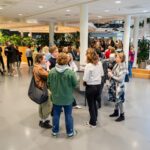
The meeting concluded with a networking lunch, where participants exchanged experiences and insights in an informal setting. Participants went home with practical strategies and new perspectives to strengthen student wellbeing within their own educational institutions. The strength of this meeting lay in the combination of research, practical experience and the voice of students themselves.
Atmosphere impression of the meeting
Photographer: Oakfield Media (Etienne)

















Continuing to work together on student wellbeing
Would you like to further engage in conversation about student wellbeing and counseling for Gen Z? Then join the National Network Student Wellbeing. This will keep you informed of the latest insights and best practices as well as exchange knowledge and experiences with colleagues in education. We look forward to sharing more insights and working together to improve student wellbeing in the Netherlands.

