
Student experience | Dominique on neuro-inclusive testing
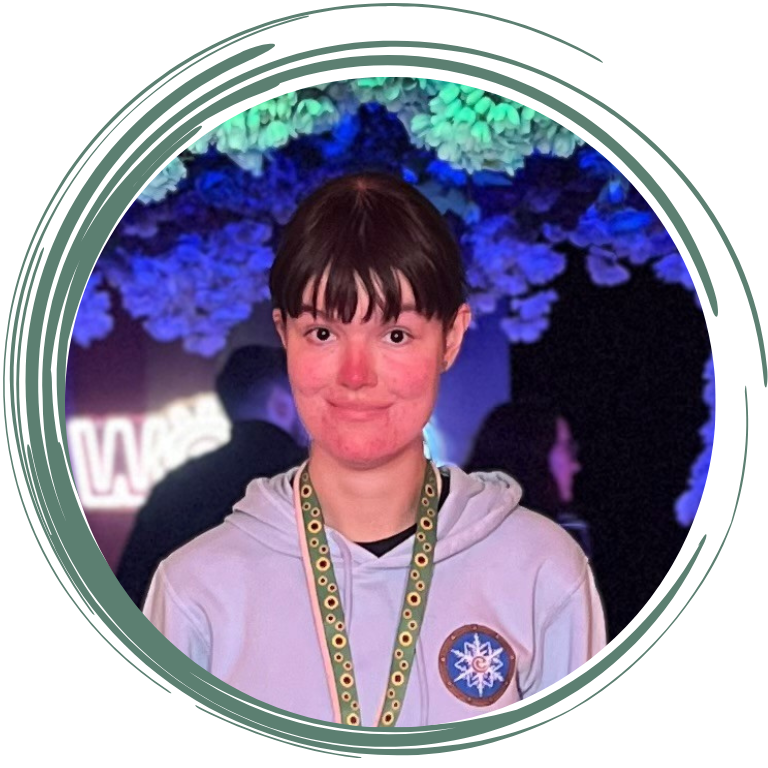
“Inclusive testing starts with listening and understanding”
Dominique, a student with autism, shares her personal experience with accessible testing. She emphasizes the importance of education being truly inclusive: that everyone’s support needs are taken into account. Her story offers valuable insights for education professionals. Dominique graduated from MBO Level 4 last year and is now active on ECIO’s Youth Advisory Council. This is how she contributes to her goal: more inclusion in education.
Custom exams that really help
In her education, Dominique was given modified tests. She explains that she did not have “real” tests, but rather exams spread over a longer period of time. For her, that was a big improvement: the exams became manageable. Various adjustments helped her to make the exams well, without compromising on content.
For example, she was given standard time extensions on every exam. This gave her peace of mind and space when her processing speed was below average. For the math exam, she used an ER exam. For example, she was allowed to use her calculator continuously. This is very important because of the partial math problems officially diagnosed in her.
“The adjustments were so well done that I really felt fairly judged.”
Understanding and listening make the difference
For Dominique, accessible testing is mostly about really listening to what a student needs. She believes it is important for schools to learn about the possibilities, even if they have no experience with them.
“I also think it is important that schools always comply with requested adjustments, as long as this is possible within the rules. This is a duty to the student and this is also in line with the principles of the UN Convention on Disability. Because schools are obliged to work on inclusive education.” For Dominique, it is a sign of respect and understanding when educational institutions provide the appropriate adjustments.
“If you look into this properly as a school, you often understand the student who claims it much better.”
An accessible test for all
If Dominique is allowed to design her own test then it will be accessible to all students. How? For students with dyslexia, texts are available via read-aloud software, images are described for blind and visually impaired students, and sound fragments are always provided with subtitles. There is also adequate color contrast. For students with ADHD or autism, the texts are short and concise to make them easier to process.
“Long pieces of text can be overwhelming for students with ADHD, and for autism, they can also be very difficult.”
Dominique’s ideas show the importance of being mindful of student diversity and taking it seriously in test design.
What could be better
Dominique has clear ideas about what schools can improve in terms of accessible testing and examination. It starts with preparation: education professionals must be well aware of the possibilities of adaptation and actually offer them. But most important, she says, is an attitude of genuine interest and understanding. When you show understanding, students feel more secure in asking for what they need, which also helps them perform better.
“Many students find it difficult to indicate that they need modifications. By responding openly and understandingly, you give the student space to share more.”
She calls for reflection, “Think: How would you feel if you were approached with prejudice and misunderstanding?”
Involve experiential students
It is incredibly important to involve experiential students in test design. Students who themselves deal with different support needs often know best what does and does not work in testing. By letting them contribute their thoughts, you can better tailor tests to what works for everyone. Not only does this make for more accessible tests, it also creates more engagement with the students themselves. They feel heard and valued, and that makes it easier to understand their real needs. Plus, it helps you identify barriers you might not otherwise see.

