
Student experience | Jikke on studying with DLD
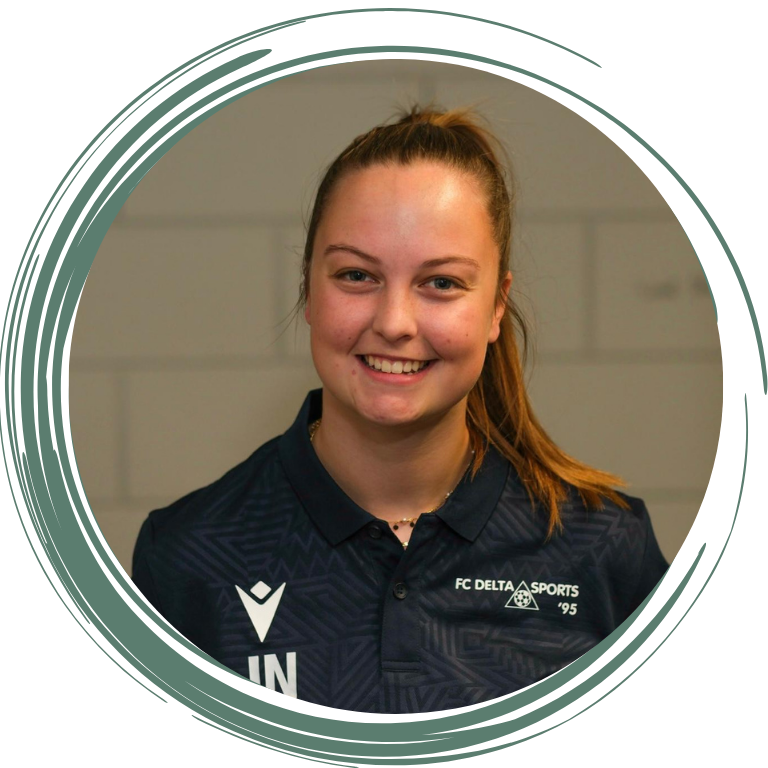
“Small adjustments, big difference.”
Jikke’s experience story offers valuable insight into the challenges a student with DLD (developmental language disorder) may encounter while studying. At the same time, it demonstrates the importance of recognition, understanding and practical support from the educational institution. Be inspired by this story, whether you are a student with DLD or an education professional looking to improve their support.
The program and my choice of this school
When looking for a suitable education, it was important to me that the way of learning and development fit my needs. After looking at several physical therapy programs, I deliberately chose the HvA because of their focus on portfolio-based learning. This system works for me because I can track, evaluate and improve my own learning through lots of practice, demos and feedback. I am now in my second year of study.
My choice of this course was based not only on the content, but also on the structure of learning. The ability to study at home gives me the chance to distribute my energy well and ensure that I can work at my own pace. Physical exercises, combined with visual and practical learning materials, make the training easy for me to follow.
Support needs
I did not inform the program in advance about my support needs because I know from experience that there is little that can be done in terms of support. Moreover, I already have years of experience in dealing with DLD and know well what I need myself. My choice of training was precisely focused on the way of learning that I already know and that helps me study better.
Accessibility of information and facilities
During the open day, for the first time I really felt recognition for my DLD. I was explained what DLD means, which was already a step forward, since that is not the case everywhere. What I especially like about this course is the emphasis on practice and feedback. In addition, I get tips on how to use visual materials to make the learning material my own. Also, I now regularly use AI, especially video or audio, then I can see and repeat it multiple times. This makes it easier for me to understand and capture the material.
Obstacles during my studies
I mainly run into the fact that I can’t always respond to something right away and my energy. Although the training fits well with my way of learning, I regularly run into fatigue. Because of the intensive study moments and the concentration it takes to understand everything, my head sometimes gets full. At home I can often recharge and continue, but I do notice that it is sometimes difficult to respond to everything at once.
What I miss is more time to process the material at my own pace. This would be very helpful for me, but at this course this is not used as often because there are no traditional tests. I would also love more teachers who really know what DLD is and how to support it. Until now, I have done my studies completely independently, without guidance from school. My mother, who works at Kentalis, has often helped me and also in my mbo education she was active in guiding teachers and fellow students to create better understanding of my disability.
Experience with online education
I have experience with online education, but it does not work best for me. The information often does not arrive well, and it is more difficult for me to get the right understanding. I do have the advantage that in this course we get a PowerPoint in advance to prepare for a lecture. I like this because then I know what to expect and I can prepare better.
Internship experiences
I did several internships in the Netherlands and also during my ski training abroad. At the beginning of an internship, I always look closely at what others are doing and often don’t say much. As I gain more experience, I notice that I am more and more able to engage in communication. It’s still difficult, though, because people often don’t really understand exactly what DLD means. If it is a talking point, I explain what DLD is and what I need, but unfortunately there is often little understanding.
What helps me interact with teachers and fellow students?
What works for me is not to be pushed too much. If I am pushed too much, I become insecure and less able to respond. It is important for me to take my time and be in charge of my own learning.
What can help education professionals?
I would like to share that in my mbo education there were attempts to get more adaptations, for example for tests. Unfortunately, this never succeeded, although it would have been incredibly helpful for me to have tests on paper and enlarged so that I could underline and write with them. This unfortunately did not come to pass, but it would make a huge difference for many students with DLD.
Tip for students with DLD
Don’t give up, even if it seems tough at times. Always find the way of learning that suits you best and keep believing in your own strengths. Even when the going gets tough, you can persevere if you have the right support and tools.

