
Student experience | B’Elanna on accessible testing
“Because of my delayed information processing, I often need more time.”
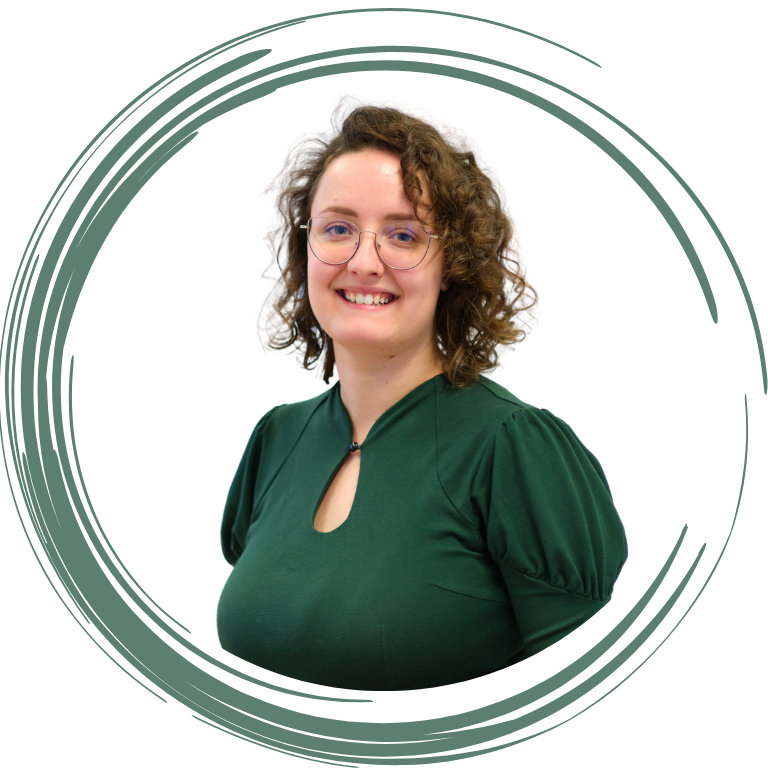
B’Elanna, a 27-year-old master’s student in Educational Sciences shares her personal experience with accessible testing. As a late-diagnosed autistic woman, she emphasizes the importance of choice and flexibility within testing to better accommodate everyone’s abilities. Her story offers valuable insights for education professionals working toward more inclusive education. B’Elanna is in her graduate year and uses her experiential knowledge to raise awareness and suggest improvements in the education system.
What is your general experience with tests in higher education?
B’Elanna: “My experience has been mixed. There are different forms of testing and some present more obstacles for me than others. In general, I have had positive experiences with written tests.”
Can you give an example of a test that felt accessible to you?
B’Elanna: “It depends a lot on the instructor and the course. Sometimes the test format is very clear, which is nice. But if the test format does not suit me well, there is often little flexibility. Some instructors are thoughtful, others strictly adhere to the rules. That sometimes makes me dependent on the instructor’s attitude.
A positive example: a literature review required you to work in pairs by default. My fellow student and I got stuck working together. The professor thought along and gave me the opportunity to do the research individually, with alternative deadlines. Thanks to that flexibility, I was able to successfully complete the course.”
“Some teachers think well, others strictly follow the rules. That makes me depend on the teacher’s attitude.”
And have there been any negative experiences?
B’Elanna: “Yes. For one course, I had to defend my point of view by filming myself and submitting that clip. That didn’t work for me. Because I was speaking to a camera at home, it didn’t feel like I was taking a test. I became uncomfortable and started stuttering, which made my story come across less well. If I had written an essay, I could have better substantiated my point of view, but there was no such option.
Another example comes from my earlier studies in Social Work. There we often practiced conversation skills with actors. Because the situation did not feel real, I often got stuck on that. In internships or real work situations, such conversations went much better. Still, during the training I was judged mainly on the practice situations, so my qualities were not always very visible.”
What is your experience with facilities for exams?
B’Elanna: “I really like that I was given extra time by default. Because of my delayed information processing, I often need more time to understand questions properly. In my previous studies, I often did not get tests finished on time, but now I manage much better. I didn’t have to submit medical documents; an interview was sufficient. I appreciated that, because a diagnostic report contains a lot of privacy-sensitive data.
There are also separate testing buildings: a large building for students without extra time and a smaller, quieter building for students with extra time. A maximum of fifty students sit there, which is much less stimulating than a room with hundreds of people. That makes a huge difference.
I had a less pleasant experience when talking to a dean. The website stated that flexible deadlines were possible, but when I asked about it, the dean immediately said, “They don’t do anything with that anyway. Without listening to my situation, the conversation was done. I found that really annoying. It is important that information is correct as well as being listened to.”
What do you think could be better in the way tests are set up?
B’Elanna: “Freedom of choice! Offer multiple equivalent options that test the same learning objective. When it comes to substantiating a point of view, it doesn’t necessarily have to be through a video. An essay or a live presentation is also possible. This would be good not only for students with disabilities, but for everyone. Everyone learns and performs differently.
To do this, however, it is important that teachers be given the time and space to evaluate alternatives. That must also be regulated in policy and prerequisites.”
“Everyone learns and performs differently. Testing should allow for that.”
B’Elanna’s story shows that accessible testing is not about one uniform approach, but about flexibility and choice. By offering alternative forms of testing, taking facilities seriously and listening carefully to students, education professionals can contribute to a more inclusive education system in which everyone’s qualities are visible.

