
UDL | Teaching approach of the HAN
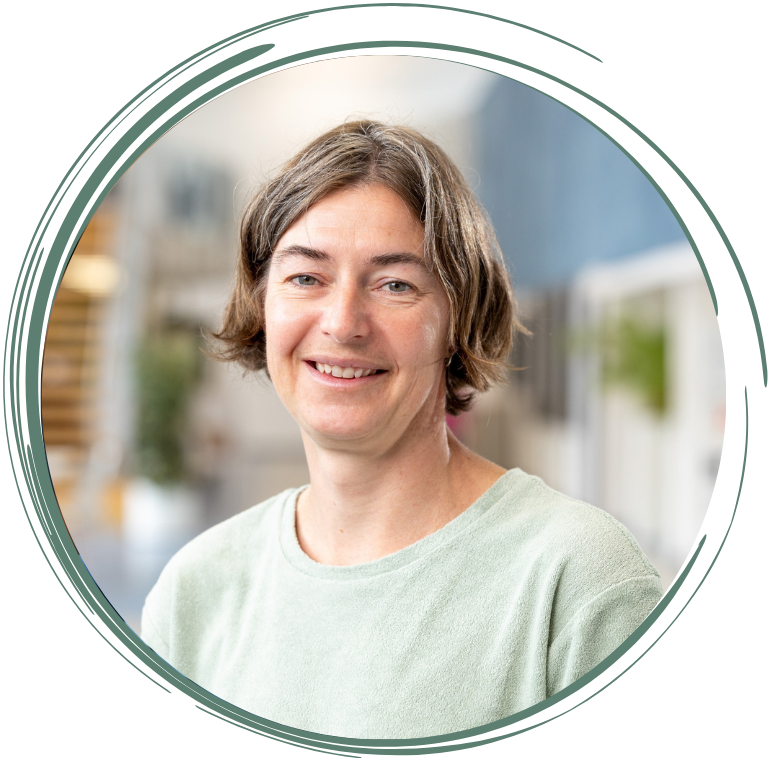
“Open educational resources, important step toward flexible and future-proof education.”
More and more education professionals want to make their teaching more flexible and accessible. Universal Design for Learning (UDL) offers a powerful starting point for this: offer lesson content in multiple ways so that each student can learn in their own way. But how do you do that without having to develop everything yourself?
The good news: you don’t have to. Thousands of useful videos, infographics and knowledge clips can be found online. The hardest part is often finding material that fits in well with your teaching and is of sufficient quality. Open Educational Resources can make all the difference. They have been used before, have been checked for content, and can be used directly in your own lessons.
At HAN University of Applied Sciences, this plays an important role in educational development. Marijn Post, policy officer for Educational Innovation with ICT, explains how HAN uses Open Educational Resources to make UDL concrete. Be inspired by her insights – and discover how you can get started yourself.
HAN’s vision of open educational resources
HAN is committed to developing and sharing digital learning materials, available internally and externally, to support flexible education. A change trajectory has been initiated with attention to vision, policy and infrastructure, involving forerunners. This eight-year trajectory, the foundations of which have been laid, will be further established in the coming years. Employees will be supported with a toolbox and a professionalization program, linked to projects such as the
Open learning materials as a building block for UDL
Open educational resources play an important role in promoting Universal Design for Learning (UDL) within HAN. UDL is a flexible teaching approach that takes into account the different ways students learn, while keeping the learning outcomes the same. With open learning materials, instructors can make their lessons more diverse, interactive and personalized. This increases accessibility.
Examples of open learning materials that teachers can use to integrate UDL into their teaching include the digital pabo forms of work. These materials offer flexibility by supporting different learning preferences. For example, students can not only read information, but also listen or watch it. For example, for students who have difficulty with textual information, open learning materials, such as knowledge clips on qualitative research, offer visual and auditory alternatives. These are just a few examples that help provide knowledge in a variety of ways so that students can choose how they take in the knowledge.
Impact of open educational resources
“There are many open learning materials, think PowerPoint presentations, videos and also MOOCS that are widely used by teachers and students. In particular, the national collaboration within the SURF Open and Online Education scheme has had a lot of impact on the HBO-V program,” Marijn says. This included working on common terms and goals for wide use and establishing a quality framework in the form of a hallmark. The scheme has now ended but cooperation within the network continues. This cooperation strengthens quality.
Not only teachers, but students are creative with OERs, perhaps even more so than teachers. They can use parts, adapt them, and turn them into new products. In the case of complex subjects, for example, they look for additional explanations on YouTube. Instructors still make relatively little use of OERs. It would be very valuable if more instructors also put learning materials online, so that there is also more supply.
HAN regards Open Educational Resources as an essential step towards flexible and future-proof education. Platforms such as Edusources (for hbo/wo) and Wikiwijs (for all education sectors) enable instructors and students to find, adapt, and share OERs. This supports personalized learning and makes collaboration easier. From HAN, 126
“Getting teachers excited about this approach sometimes remains a challenge. With a project we want to inspire and involve them” – Marijn Post
These platforms make educational resources accessible without copyright restrictions, thus contributing to HAN’s educational innovations and lifelong development (LLO) ambitions.
Getting started with a flexible teaching approach
Be inspired by the use of OERs at HAN and discover how you can use UDL and digital resources to make your own education more flexible and inclusive. OERs offer numerous opportunities to adapt teaching materials to the diversity of your students, and give them the freedom to learn in the way that suits them best.
Tips from the practice of Marijn Post
Share your knowledge and experiences?

